
Boris Dittrich
”FIGUREHEAD OF THE LGBTQI+ BATTLE”
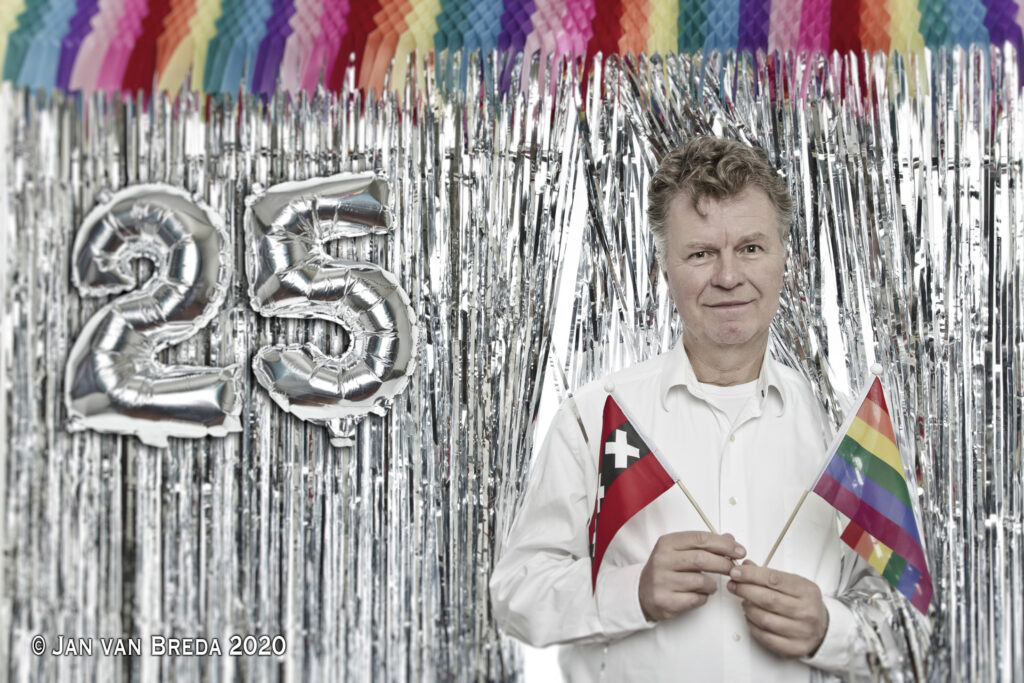
Interview: Paul Hofman
Politics and human rights are close to his heart. In the midst of the 90’s when Boris Dittrich (63) becomes a congressman for the D66 and as an openly homosexual he becomes a well-known figurehead for the fight for equal rights for the LGBTQI+ community. This year he is one of the Pride Ambassadors. “We still have to conquer a lot before we have equal rights and equal opportunities.”
A year ago, he got back into politics again. In 2006 he quits to be party leader of the liberal D66 to become the director of minorities of human rights organization Human Rights Watch. This is a job that he does very passionately. Still, it’s hard for him to let go of politics for good. He becomes a member of the senate for the D66 about a year ago. Boris also writes books. His new roman Terug naar Tarvod (Back to Tarvod) was published at the end of May.
In his very limited free time and during traveling Boris writes crime novels. It is mostly thrillers where in LGBTQI+ people not shown as a tourist attraction but as detectives who solve murders.
ASYLUM
When he was asked to become an ambassador for Pride Amsterdam 2020, he reacted ecstatically. “I’m very happy to be an ambassador for Pride week, because I stand for inclusivity and humanity. People who had to flee their country because of very serious threats, social-cultural shortfall and discrimination have the right to ask asylum somewhere else to build a life in safety. “My father fled his own country. From my own experience I know how important it is for The Netherlands not to completely close their borders but to stay open for the ones that need the security like we have here.”
COLORFUL
The role as ambassador means a lot to him. “Our community is very colorful and diverse. I am part of that as a white man. As ambassador I want to turn to the people outside of the community and show how much we still have to conquer when we speak about equal rights and equal opportunities.”
His message? “First of all, I don’t want to be labeled as the gay white cis-man. I am here for the whole community and beyond that. My message is that we as community need to show solidarity to others who are discriminated for who they are.” About which people are you thinking? “I think of people with a mental or physical disability, people with a migration background and women. We don’t need to focus on ourselves only.” Then: “All that navel gazing won’t get us any further and mutual division won’t either.”
NO PARTYANIMAL
He already has an idea on how to fill in his ambassadorship. “I want to be visible and be actively take part in the ten-day program between the Pride Walk and the Canal Parade.” Boris has tons of ideas. “I am talking about organizing meetings where we talk about the evil of conversion therapy (cleansing people of sexual orientation or gender identity) and other violations of human rights.” Not surprising is that with his background as a writer he wants the organize a literature night with LGBTQI+ writers. “There is so much more than partying. I am not a party animal, they don’t need me for that.”
PAINFUL
Boris had been to a lot of Pride festivals in his life, he tells us. “The Pride that really made an impact on me was the one in Moscow in 2007. If was there as representative of Human Rights Watch and knew that the Russian authorities are against homosexuality. I was in the middle when religious groups started to beat up the LGBTQI+ people and the other way around. Grannies with baskets full of eggs walked up and other people started to throw those eggs at us. The police just stood there and didn’t do a thing. The hate and the indifference from the cops was very painful to experience. That’s when you realize how good things are in The Netherlands.
He’s very proud of the Pride team this year. “Take Pride in Us means for me personally that others can be happy with us. I hope that they look beyond the labels of LGBTQI+ and see us as equal human beings who are important for our society and that our sexuality or gender identity is just a small part of being human.”
Critics say that Pride isn’t necessary anymore. Their argument? They have achieved everything. But nothing could be further from the truth, Boris says. “We’re not there yet.”
Pride Ambassador since 2021.